


Industrie nieuws
Thuis / Nieuws / Industrie nieuws / Debinding Explained: Thermal, Catalytic & Solvent Methods in MIM & 3D Printing
Debinding Explained: Thermal, Catalytic & Solvent Methods in MIM & 3D Printing
Datum: Sep 01, 2026
Your injection molded feedstock or binder-jetted metal part is not ready for the furnace yet. Debinding is the step that removes the binder system before sintering, and it directly affects whether your final part will be dense, dimensionally accurate, and free of surface defects. Powder metallurgy plants that skip or rush this step often face clogged furnaces, blistering, and inconsistent shrinkage. The good news is that debinding is a controllable process with three well-understood routes: thermal, catalytic, and solvent.
Key takeaway: Debinding is not a simple thermal treatment but a controlled chemical reaction. The decisive factors are temperature range, ramp rate, atmosphere type, and exhaust capability. Selecting the right method can improve sintering yield significantly while keeping furnace maintenance risk to a minimum.
Core Principles: How Debinding Works
Binder systems in metal injection molding and powder metallurgy usually consist of two components: a backbone polymer that holds the part shape, and a filler or wax that improves flow during molding. The filler must be removed first, while the backbone remains to prevent the part from collapsing. Each debinding method targets a different part of that binder system, and the mechanism determines how fast you can safely run the cycle.
Thermal debinding relies on heat to break down the polymer. At temperatures between 200°C and 550°C, the binder decomposes into gases that are carried away by a flowing atmosphere. The process is simple and works for a wide range of materials, but it can be slow for thick sections because the outer layer tends to decompose first and form a dense skin.
Catalytic debinding uses an acid vapor, often nitric acid, to attack specific polymer chains such as polyoxymethylene. Because the acid penetrates the part instead of relying on surface decomposition, the process runs at a much lower temperature, roughly 100°C to 160°C, and completes in hours rather than a full day. The trade-off is that the equipment must be corrosion resistant and gas tight, and the exhaust must be neutralized.
Solvent debinding is a gentler route that dissolves the wax fraction in a liquid solvent at room temperature or slightly warmed. It is well suited to parts with complex geometry, but the solvent must be recovered and handled according to environmental rules.
Thermal Debate: Equipment Choices That Matter
For small batches and laboratory-scale thermal debinding, a ceramic fiber muffle furnace provides the precise heating and venting required to manage decomposition gases and maintain a stable temperature profile.
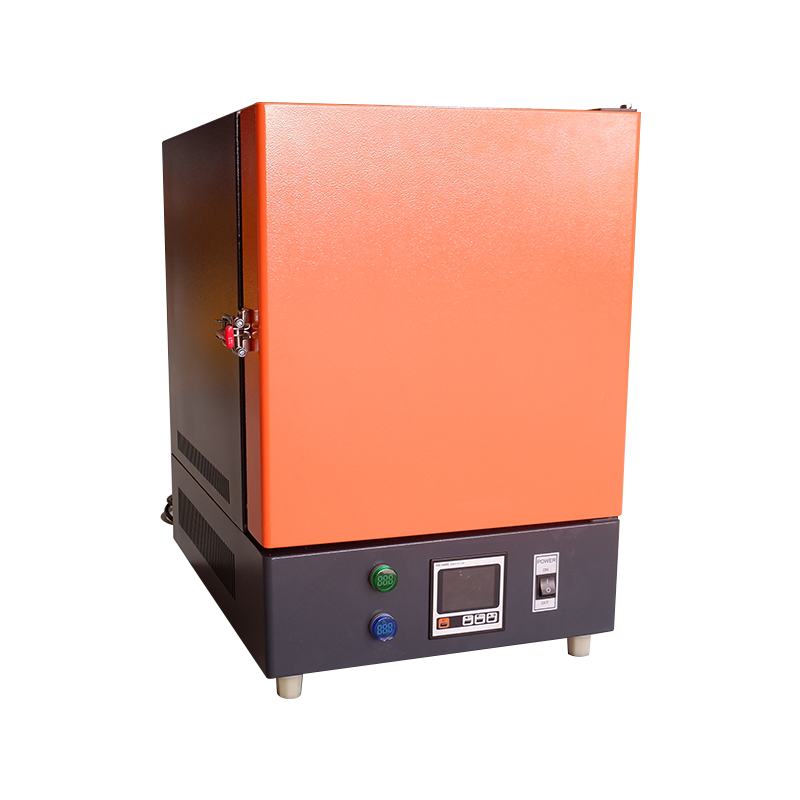 Ceramic Fiber Muffle Furnace with Multiple Temperature Options Designed for small-batch and laboratory thermal debinding, this furnace offers precise heating and venting to manage decomposition gases while maintaining a stable temperature profile across 200-550°C in air, nitrogen, or vacuum. View Product →
 Thermal Route
Heat from 200°C to 550°C in air, nitrogen, or vacuum. Best for thick-walled parts when the ramp rate is kept low enough to avoid surface hardening.
Catalytic Route
Acid vapor at 100-160°C. Very fast and produces minimal surface blistering, but requires corrosion-resistant, gas-tight furnaces and proper exhaust handling.
Solvent Route
Liquid solvent dissolves the wax fraction at room temperature or low heat. Gentle on intricate shapes, but adds a solvent recovery step to the process.
Thermal vs. Catalytic vs. Solvent: A Practical Comparison
The table below summarizes the trade-offs that process engineers weigh when selecting a debinding furnace. The practical impact shows up in cycle time, equipment cost, and surface quality.
Method
Temperature
Typical Time
Main Risk
Thermal
200-550°C
4-12 h
Blistering from fast ramps
Catalytic
100-160°C
2-6 h
Acid corrosion and vapors
Solvent
20-60°C
4-12 h
Solvent recovery burden
Hidden Indicators: Why Ramp Rate and Atmosphere Control Matter
A common failure mode in thermal debinding is case hardening. If the ramp rate is too fast, the outer layer decomposes and forms a dense skin that traps decomposition products inside. Those trapped gases cause voids or blisters during sintering. The chart below illustrates how ramp rate affects debinding time for a standard 5 mm thick section.
1°C/min
3°C/min
8°C/min
Bar height represents relative debinding time. A slower ramp reduces the risk of surface defects but increases cycle time. For this reason, thick-walled parts often require a 1°C/min ramp, even when that triples the process duration.
Atmosphere control also plays a hidden role. Parts made from oxidation-sensitive metal powders need inert gas or vacuum during debinding to keep the metal surface clean before sintering.
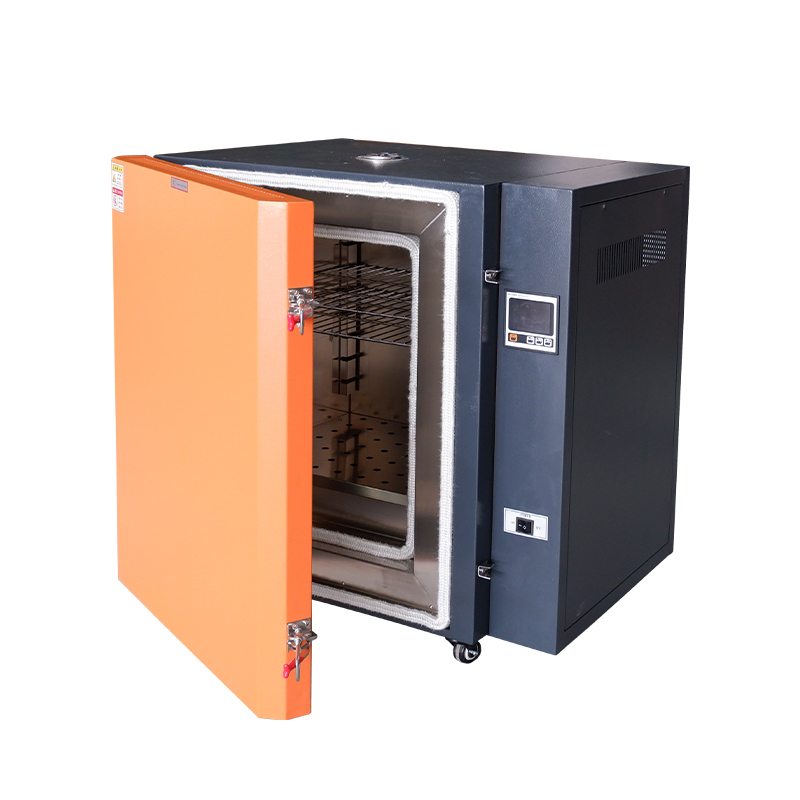
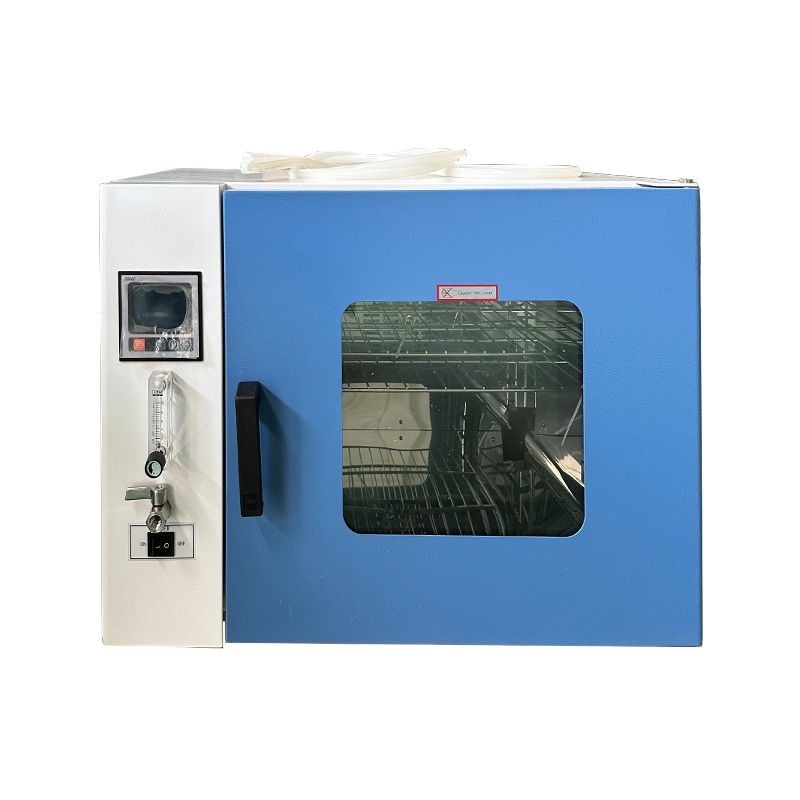 300°C Nitrogen-Filled Drying Oven for Low-Temperature Debinding Operating at 300°C with adjustable nitrogen flow, this oven maintains a stable inert atmosphere and even temperature distribution, making it suitable for the low-temperature debinding stage of oxidation-sensitive metal powders. View Product →
 Nitrogen-filled ovens with adjustable gas flow can maintain a stable inert atmosphere and even temperature distribution, which is a practical choice for the low-temperature debinding stage.
Industry Application Distribution
Debinding is most commonly used in metal injection molding, but additive manufacturing is steadily increasing its share. The chart below reflects an approximate distribution based on current industry activity.
Metal injection molding ~35%
Metal binder jetting ~25%
Ceramic injection molding ~20%
Other powder processes ~20%
Metal binder jetting and ceramic injection molding have different debinding requirements. Binder jetting often uses lower-temperature thermal routes, while ceramic molding may rely on catalytic debinding when part shapes are complex. The fastest growing segment is metal binder jetting, as it now accepts more industrial materials and larger build volumes.
Selection Guide: Steps to Reliable Debinding
A structured approach avoids trial and error. The following steps guide you from binder identification to production confirmation.
- Identify the binder type. Check the feedstock datasheet for the binder backbone and filler composition.
- Choose the debinding method that matches the binder type and part geometry.
- Select a furnace with the right temperature range, gas supply, and exhaust capacity. A vacuum or inert atmosphere may be required for oxidation-sensitive powders.
- Develop a ramp profile. Start with a condition that matches the thickest cross section in your part family.
- Verify with trial pieces, then monitor sintered density and surface quality to lock in the process window.
For powder metallurgy companies, the equipment investment in debinding is small compared with the cost of rejecting whole batches after sintering. A correctly selected debinding furnace can eliminate the majority of common defects like blistering, carbon residue, and uneven shrinkage.
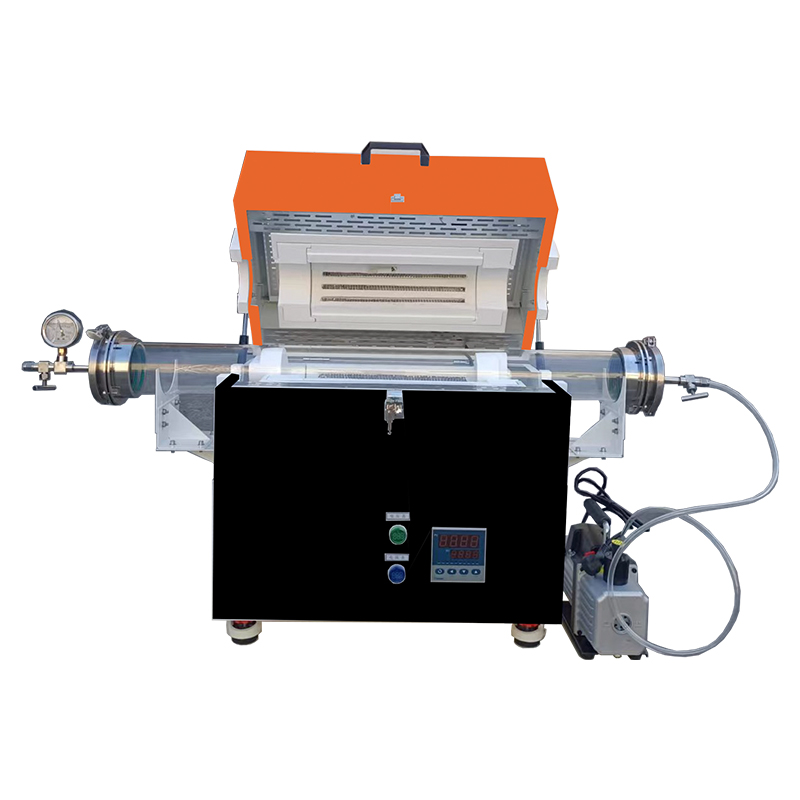 Vacuum Tube Furnace with Multiple Temperature Options for Controlled Debinding For vacuum or atmosphere-sensitive debinding, this vacuum tube furnace offers precise gas control and even heating across the work zone, supporting both debinding and early-stage sintering in a controlled environment. View Product →
 For vacuum or atmosphere-sensitive debinding, a vacuum tube furnace provides precise gas control and even heating across the work zone, which supports both debinding and early-stage sintering in a controlled environment.
Maintenance and Compliance Recommendations
Debinding generates flammable gases, corrosive vapors, and condensates that must be managed carefully. The following practices protect equipment, operators, and product quality.
- Inspect exhaust piping regularly and remove condensed polymer deposits that can restrict airflow.
- For catalytic debinding, use corrosion-resistant furnace internals and gas-tight door seals, and install gas leak detectors as a standard protection.
- Over-temperature protection and explosion-proof certification are essential for furnaces that operate near flammable solvent residues.
- Ensure waste gas and liquid recovery systems comply with local environmental regulations.
For more on explosion-proof equipment standards and safety considerations, see our industry note on cutting corners on explosionproof equipment .
Debinding is often treated as a routine step, yet the process data show that it deserves the same attention as sintering. With the right equipment and controlled conditions, debinding becomes a reliable, repeatable process that protects your investment in powder and your customers' expectations for quality. Shanghai Dengsheng manufactures dryers, furnaces, and atmosphere control systems that support these critical debinding workflows.
Bericht verzenden
Aanbevolen producten
Producten van bekende bedrijven worden diep vertrouwd door gebruikers.

- CONTACT
-
- No. 119, Qingliang Avenue, Yaozhuang Town, Zhejiang, China.
- [email protected] ( Email )
- +86-13671719019 ( Phone )
- +86-021-57440136 ( Tel )
- PRODUCT
-
- Serie droogovens
- Vacuümbox-serie
- Explosieveilige serie
- Ovenserie voor hoge temperaturen
- Incubator-serie
- Testkamerserie
- Andere serie
- Geforceerde luchtdroogoven
- Weerstandsoven
- Vacuümbuisoven
- Vormincubator
- Vacuüm atmosfeeroven
- Biochemische incubator
- Kooldioxide-incubator
- Explosieveilige vacuümdroogoven
- Testkamer voor hoge en lage temperaturen
- MOBIEL
Auteursrecht ©
Shanghai Dengsheng Instrument Manufacturing Co., Ltd.
Alle rechten voorbehouden. Fabrikanten van laboratoriumapparatuur

 Terug naar boven
